Children's Multivitamin Review: What Parents Should Check
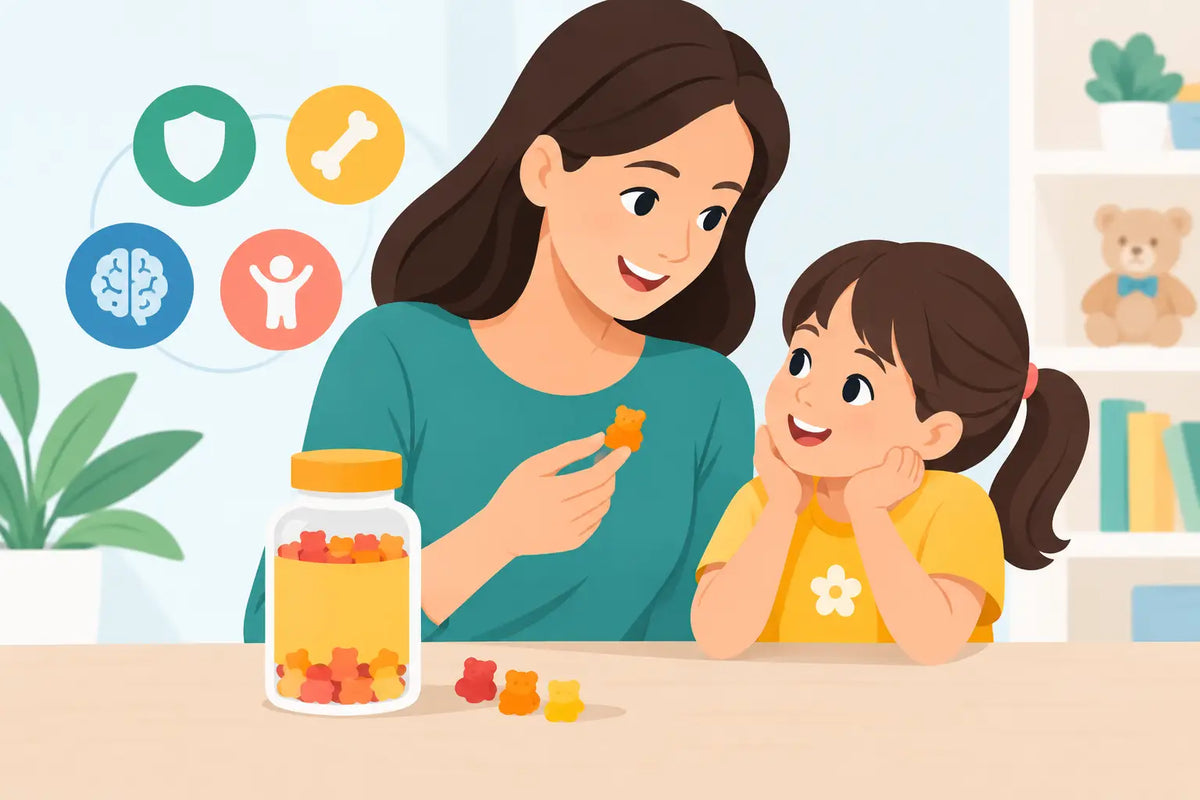
The multivitamin your child actually takes is the one that can become part of a routine. That is why a useful children's multivitamin review should look beyond a bright label or a long ingredients list. For parents, the real questions are simpler: does it suit your child’s age, provide meaningful nutrients, meet your family’s dietary needs and taste pleasant enough to take consistently?
A gummy can make the daily moment easier, particularly for fussy eaters who refuse chalky chewables or struggle with tablets. But convenience should not mean guessing. Here is how to assess a children’s multivitamin with confidence, without turning the kitchen table into a nutrition lab.
Children’s multivitamin review: start with your child, not the claims
Children do not all need the same thing. A toddler with a limited appetite, a school-age child who avoids fish, and a teenager with a varied diet have different routines and nutritional gaps. A multivitamin is designed to support a balanced diet, not stand in for one. If your child has a diagnosed deficiency, a medical condition, allergies or takes prescribed medication, speak to a pharmacist, GP or paediatric dietitian before adding a supplement.
Age guidance is the first non-negotiable check. Use only a product labelled for your child’s age group and follow the stated daily serving. More is not better with vitamins and minerals. Combining a multivitamin with other fortified products or supplements can mean certain nutrients are duplicated, so check the labels as a whole.
For many UK families, vitamin D is a sensible nutrient to look for. Public health advice recommends a daily vitamin D supplement for children aged one to four years throughout the year, and for older children during autumn and winter. Some children may need it year-round, including those who spend little time outdoors or have darker skin. A children’s multivitamin can be a convenient way to include it, provided the dose is appropriate for their age.
Look for useful nutrients, clearly stated doses
A crowded nutrient panel can look impressive, but the detail matters more than the total number of ingredients. The best labels tell you the amount per daily serving, rather than relying on broad phrases such as “complete support”. They should also show the percentage of Nutrient Reference Value where applicable, so you can see what the formulation is intended to provide.
Vitamin D supports normal immune system function and normal growth and development of bones in children. Vitamins A and C, alongside minerals such as zinc, may also appear in children’s formulas. Each has a role in the body, but the right formula is not necessarily the one with the highest figure beside every nutrient.
Be particularly thoughtful with fat-soluble vitamins, including vitamins A and D, because the body stores them. Avoid layering several products that contain the same vitamins unless a healthcare professional has advised it. A transparent product makes this easier: the dose should be readable, the serving size should be obvious and there should be no need to hunt through tiny print.
What about Omega 3-6-9?
Omega 3-6-9 is a popular addition to children’s gummies, especially in families that do not regularly eat oily fish. Omega-3 fats are commonly associated with brain and eye development, although the specific benefit of a supplement depends on the type and amount of omega-3 provided, as well as the child’s overall diet.
Omega-6 and omega-9 are already common in everyday foods such as seeds, nuts, vegetable oils and avocados. Their presence is not automatically a reason to choose or reject a product. Instead, check what the label says about the source and amount of each fatty acid. For vegan households, plant-derived ingredients matter, and a clear statement of the source removes unnecessary uncertainty.
Check the gummy, not just the vitamin panel
A child-friendly format should be enjoyable, but it still deserves a close look. Gummies may contain sugar, glucose syrup, sweeteners, flavourings or colourings. There is no universal “perfect” number for every family, yet it is worth comparing the daily serving rather than judging the pouch at a glance.
A small amount of sugar may be a reasonable trade-off if it helps a child take a suitable supplement reliably. That said, gummies are not sweets. Keep them out of reach, give the correct serving only and build them into a routine such as breakfast rather than leaving the pouch accessible for grazing.
For parents seeking a simpler ingredient profile, fruit-pectin gummies are a practical alternative to gelatine-based options. Pectin is plant-based, which can make it suitable for vegan diets. It is also worth checking gluten status if coeliac disease or gluten avoidance is part of your household’s needs.
A short ingredient list is not automatically superior, and a longer one is not automatically poor. What matters is that you recognise the purpose of what is included, the allergens are clearly declared and the product meets the standards your family follows.
Vegan and halal claims should be specific
“Suitable for” can mean different things across brands. If vegan or halal certification matters to your family, look for a clear, current certification statement rather than assuming a gummy is suitable because it does not contain gelatine.
A vegan product should avoid animal-derived ingredients, but check the full formula and not only the headline. Halal suitability can involve both ingredients and manufacturing controls. For many families, a gummy that is both vegan and halal-certified takes the friction out of the decision, especially when siblings or relatives follow different dietary preferences.
Manufacturing information also offers useful reassurance. A UK-made product can make labelling, customer support and supply details easier to assess, although country of manufacture alone does not prove quality. Independent batch testing is a stronger practical signal that a brand is taking consistency seriously. Look for brands that are open about testing and willing to state what their product contains.
Flavour is not a frivolous detail
Parents are often told to focus only on nutrition, but flavour and texture directly affect whether the supplement is used. A berry gummy that gets rejected after two days is less helpful than a well-formulated option your child accepts as part of breakfast.
That does not mean buying on flavour alone. Treat taste as one part of the decision alongside dose, age suitability and ingredients. If your child is sensitive to textures, start with a small pack where possible and establish a calm routine. Presenting a gummy as a normal daily supplement, rather than a reward or treat, helps set sensible expectations.
Avoid promising that a multivitamin will transform appetite, energy, concentration or behaviour. Children’s wellbeing is shaped by sleep, meals, movement, emotional security and health needs, not one gummy. The realistic benefit is often far less dramatic and more useful: a simple way to help cover selected nutritional bases on days when family life is busy and eating is not perfectly predictable.
How to compare two children’s gummies fairly
When two products both look appealing, put their labels side by side and compare the daily serving, not the number of gummies in the pouch. Then assess these five points:
- age range and daily dosage instructions
- vitamin D and other nutrients relevant to your child’s diet
- amounts per serving, including any omega fatty acids
- sugar, allergens and whether the gummy is gelatine-free, vegan or halal-certified
- manufacturing transparency, batch testing and storage guidance
A calmer way to build the habit
Once you have chosen a suitable product, consistency matters more than perfection. Keep it with the breakfast items, use the same time each day and follow the label’s storage instructions. If you are starting a gummy with Omega 3-6-9, it may be easiest to give it with food as part of an established meal routine.
Vitamynx children’s gummies are made in the UK with plant-based fruit pectin and are designed to offer big nutrition for little ones without gelatine or gluten. Yet the right choice will always come back to your child’s age, diet and the details on the label.
The best children’s multivitamin is not the one that makes the biggest promise. It is the one with clear doses, appropriate ingredients and a format your family can genuinely keep up with, one ordinary morning at a time.